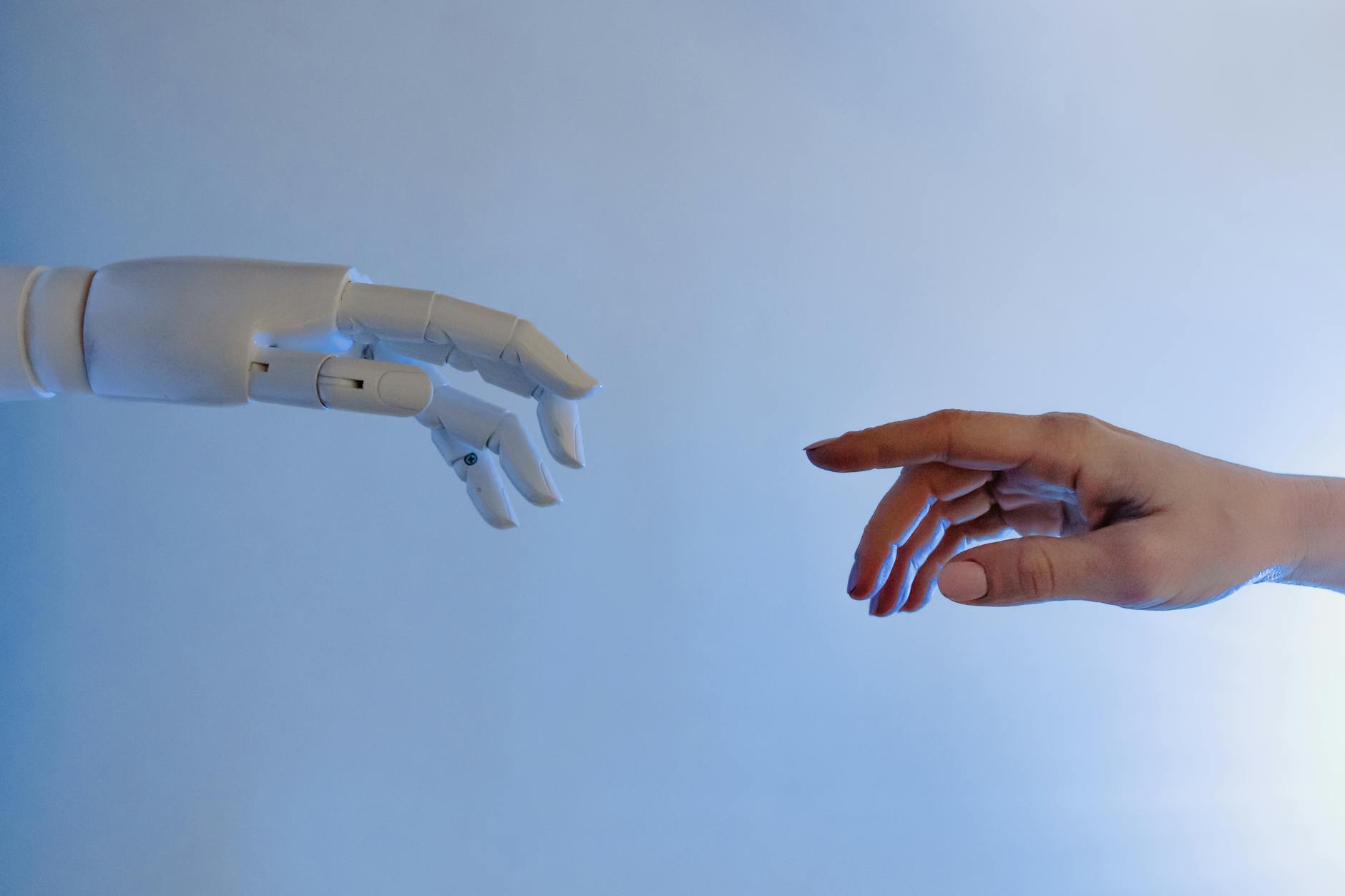

At the recent CES showcase, a prototype robot from Figure AI greeted attendees not with a pre-recorded script but by detecting a smile and adjusting its tone, a capability made possible by Visual Language Models Train technology. This shift marks a departure from purely programmed responses toward systems that can read and react to human emotion in real time. For everyday users, the benefit is more natural interactions with service bots, while builders gain a new toolkit for creating adaptive machines. Businesses, meanwhile, see opportunities to personalize customer experiences and improve internal workflows.
How Models Work
VLMs are trained on large multimodal datasets that pair images or video frames with textual descriptions of emotions. The visual encoder - often a Vision Transformer (ViT) or a hybrid CNN-Transformer - extracts spatial features, which are then fused with textual embeddings from a language model such as GPT-4 or LLaVA. During fine-tuning, the system learns to associate specific visual patterns (e.g., furrowed brows, clenched fists) with emotion labels (anger, anxiety, joy).
In practice, a robot equipped with a VLM can capture a live video feed, run it through the visual encoder, and feed the resulting vector into the language model, which outputs an emotion token (e.g., “frustrated”). The robot’s control stack then selects an appropriate response: offering help, changing tone, or pausing activity. For instance, a customer-service robot at a telecom store can detect a shopper’s irritation and automatically escalate the interaction to a human agent, a workflow highlighted in recent tech trends coverage on /tech-trends.
The IEEE article also notes that VLM training now leverages self-supervised methods, reducing the need for manually labeled emotion data. This lowers the barrier for smaller firms to adopt the technology, as seen in the surge of open-source projects listed on /AI articles.
Practical Takeaways for Users, Builders, and Businesses
1. Users should look for platforms that expose VLM APIs (e.g., OpenAI’s ChatGPT-4V endpoint) to integrate emotion-aware features into existing applications.
2. Builders can accelerate development by using pre-trained VLM weights and coupling them with robot middleware such as ROS 2, as demonstrated in the latest electronics deals for hobbyist kits.
3. Businesses must consider privacy implications; the German court ruling that found Google liable for AI-generated overviews (/German Court Rules Google Liable for AI Overview) underscores the need for transparent data handling when processing facial data.
Expert analysts suggest that the next wave will see VLM-enabled robots operating in collaborative roles, such as co-working with humans in offices or assisting in medical triage, where emotional context can be critical for safety and efficacy.
Conclusion
The emergence of Models Train technology is reshaping how robots perceive and respond to human feelings. For everyday users, this means more intuitive interactions with service bots and smarter home assistants. Builders benefit from reduced development cycles through ready-made VLM modules, while businesses can leverage emotion-aware automation to enhance customer engagement and workplace safety. As the technology matures, staying informed about integration pathways, privacy safeguards, and industry trends will be essential for anyone looking to harness the full potential of emotionally intelligent robots.
Key takeaways
- Visual Language Models (VLMs) such as OpenAI’s GPT-4V, Google’s Gemini Vision, and Meta’s LLaVA combine a visual encoder with a large language model, enabling robots to map visual cues - facial expressions, body language, and contextual scenes - to emotional states. The IEEE Spectrum report “Robot Emotions: Models” documents a rapid increase in pilot deployments across retail, healthcare, and logistics sectors. Companies like Boston Dynamics (Spot), Agility Robotics (Digit), and Figure AI (Figure 01) have integrated VLM APIs into their platforms, allowing developers to attach emotion-aware behavior without writing custom computer-vision code.
- For users , the immediate impact is smoother assistance in call-center chatbots and smart home assistants that can sense frustration or excitement. Builders can now embed emotion detection into robot firmware using pre-trained VLM modules, reducing development time from months to weeks. Businesses benefit from richer analytics - for example, a retail robot can gauge shopper sentiment and adjust product recommendations, while a warehouse robot can modulate its speed based on worker stress levels, improving safety and productivity.
Frequently asked questions
- How do Models enable robots to interpret human emotions?
- VLMs process visual input through a transformer-based encoder, extract facial and gestural features, and map those features to emotion labels using a language model trained on multimodal datasets. The resulting emotion token guides the robot’s behavioral response.
- Which companies are currently integrating VLM technology into consumer robots?
- OpenAI, Google, Meta, Boston Dynamics, Figure AI, and Agility Robotics are among the firms embedding VLM APIs into their robot platforms, allowing developers to add emotion-aware capabilities with minimal custom code.
- What are the ethical and privacy concerns for businesses using emotion-reading robots?
- Processing facial data raises privacy risks, especially if recordings are stored or shared without explicit consent. Companies must implement clear data-retention policies and obtain informed consent, as highlighted by recent regulatory scrutiny.
Sources & references
Primary reporting and data used in this article. We cite original publishers to support fact-checking and editorial transparency.
You've finished this article
Keep exploring AI coverage or browse today's top deals.